Dec 18, 2025
 3 min read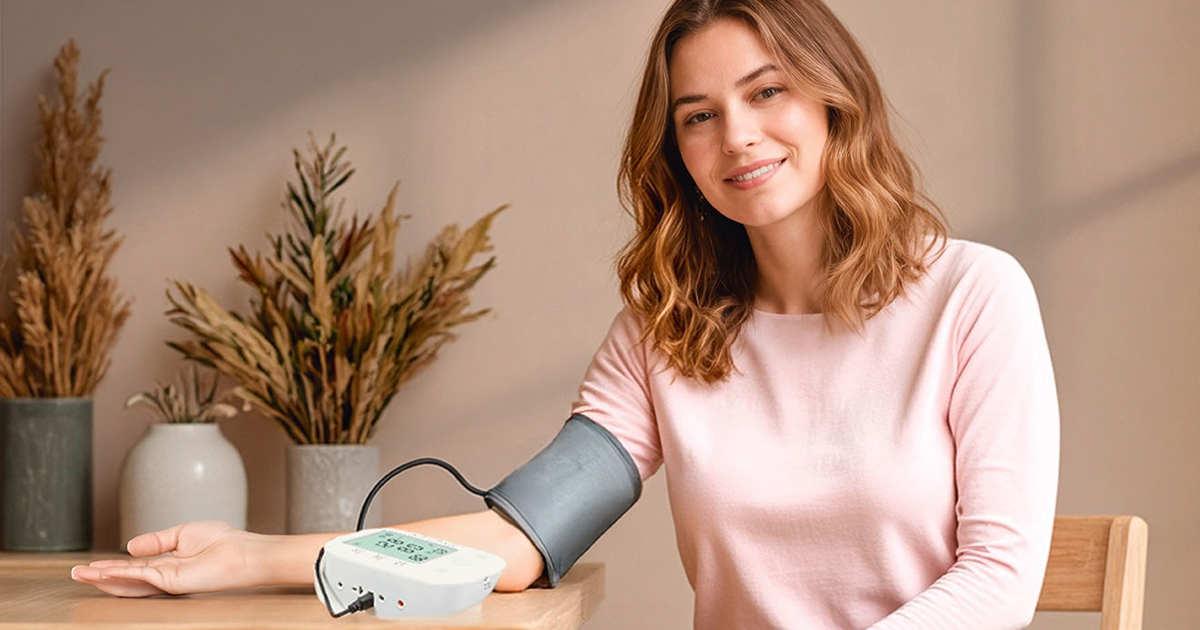
4 out of 5 strokes can be prevented with healthy habits.Controlling high blood pressure and maintaining a balanced diet is key to reducing your risk.Protection is in your hands.
Four out of five strokes can be prevented by following healthy lifestyle habits.We mentioned this at the beginning, but it is important to remember this information because there is a lot we can do to prevent it.
How to avoid ictus with healthy habits?
1. Check the voltage
"If you never look at it, you don't know if it's in the right range or high, so you have to start treatment," explains Dr. Castellanos, who emphasizes that hypertension is a major risk factor for stroke.
Although women generally have some protection against vascular disease due to estrogen, they are postmenopausal and, as levels of this hormone decline, they are at the same risk as men because they lose protection from estrogen.
Therefore, Dr. Castellanos reminded us that, in this period of life, especially for women, it is important to get rid of stress from time to time.
2. Follow a healthy, Mediterranean diet
The main focus is vegetables, fruits, vegetables, whole grains, legumes, fish and healthy fats.
This is the most recommended diet because these anti-inflammatory foods have a great effect on the whole body (including the brain) and because, with them, blood pressure and lipid (fat) levels are better controlled.
A large study published in the journal GeroScience (researchers examined and analyzed more than 860,000 people) found that those who strictly followed the Mediterranean diet had a 12% lower risk of stroke than those who did not.
3. Avoid smoking completely and limit alcohol consumption
Chronic high stress is usually another enemy of general health and the brain: high levels - sustained over time - of blood cortisol, the main stress hormone, cause systemic inflammation.
4. Life is eternal
Physical activity is a good way to relieve this stress.Moreover: regular moderate aerobic activity is protective against all diseases;Recent scientific studies show that strength training has positive effects on metabolism and overall health.It is best to combine them.
5. Consider other risk factors
It is better to have a cardiological examination from time to time, because some cardiovascular diseases, such as atrial fibrillation, can cause blood clots to reach the brain and block its vessels.In fact, two out of every 10 strokes have a heart failure source.Atherosclerosis, cholesterol plaques that accumulate in the walls of blood vessels, is another cause of strokes.
The neurologist Pere Cardona highlights another: sleep apnea, which generates an oxygen disturbance that overloads the heart."You should always consult your doctor," suggests this expert.
Oral health has a huge impact.Recent studies have shown that maintaining good oral and dental hygiene is essential.The explanation is that it helps to keep the oral microbiota, the collection of microorganisms that live in this cavity, at bay.When the bad bacteria are out of balance and overcrowded, they contribute to systemic inflammation.
6. Get early diagnosis and proper treatment
Taking action within 90 minutes of a stroke can save a person's life and ensure a better recovery.There are currently very effective treatments that achieve this, but their effectiveness depends on when they are applied.
For this reason,Functional protocols need to make us faster.Recently, the injured person was not treated until he arrived at the hospital.He was taken to the hospital today, treated and stabilized.
- It is also very quick to get into the hospital (prevented by medical professionals as a stroke).Upon arrival, the so-called Stroke Code was immediately applied, and medicine began to restore blood flow to the affected area of the brain.
- The first choice is to give a drug and, if this is not possible, the thrombus is removed with a catheter that is delivered through the gear until it reaches the clot, and is removed.
The stroke code works like this
"If symptoms are detected, it is important to call 112 or 061 quickly," says Dr. Cardona. "Emergency services activate the stroke code: they transfer the patient to the nearest hospital for a CT scan and a neurologist. In the ambulance, their blood pressure is taken and, if necessary, medicine is given to control it."
- At the hospital, "neurologists do a brain scan to identify the type of stroke and follow the appropriate treatment plan," he tells us.
"Treatment may be considered to be the removal of a blood clot that blocks the flow of blood to the brain (thrombolysis or thrombectomy)." If it is a stroke, immediate blood pressure control is necessary.
- "As soon as the acute phase has stabilized, rehabilitation will begin so that the patient returns home in optimal conditions," emphasized the expert.
An increasingly optimistic prediction
Because these medical emergencies are now recognized earlier, and because there are better protocols and more effective treatments, the prognosis of the disease has greatly improved.
The survival rate has doubled, which is now 80%.And six out of 10 patients recover and can return to normal life.The rest have certain consequences (for example, difficulty in speech or movement).
For this reason, Dr. Perry Cardona insists that in addition to providing psychological support to the patient and his family throughout the process, the rehabilitation process should be started as soon as possible together with speech therapists and physiotherapists.
Future action protocols will be even faster: German researchers have developed a blood test that measures the levels of a specific brain protein (GFAP) that is released into the bloodstream when brain damage occurs.
In this way it can be identified whether it is a hemorrhagic stroke or an ischemic stroke.If this test is valid, treatment can be implemented even before the person reaches the hospital.